Skip to content
OWASP KOREA DAY

Security in the age of AI,
the links between us

A machine can learn knowledge. Experience only becomes valuable when it is shared.

Sat 28 Nov 2026, 10:00SpaceShare Samseong Station Center

#OWASPKoreaDay
Attend

Attend

Put it in your calendar

Keep 28 November free.

Sat 28 November 2026, 10:00–18:00 · SpaceShare Samseong Station Center

Tickets

Tickets

Admission goes straight into the venue and running the day. Both early-bird rounds have sold out; standard tickets, the last round, are on sale now.

Early bird 1

Sold out

₩5,000

Opened Sep 15 · 50 tickets

All 50 went — this round is closed.

Early bird 2

Sold out

₩7,000

Opened Oct 15 · 100 tickets

All 100 went — this round is closed.

Schedule

On the day

Registration 09:30, programme from 10:00. The main stage in Regency Hall runs alongside the community room, the labs and the booths.

Schedule by room, 28 November 2026

Regency Hall — Main stage
  • 10:00–10:15 김동현 · OWASP Korea Day opening
  • 10:25–11:00 변준우 · Enterprise AI Agent Security 101
  • 11:00–11:25 Break
  • 11:25–12:00 Eunsu Shin · Authentication and permission management for building and using agentic AI safely
  • 12:00–12:35 Min Sung Jung · Is building AI guardrails really that simple? Developing a domain-specific (legal) AI guardrail
  • 12:35–13:45 Lunch
  • 13:45–14:20 Jinho Ju · Earning Zero-Days with LLM: Months of Bug Hunting on Real Targets
  • 14:20–14:55 이가람 · Is it safe to keep only the vectors? Embedding inversion and protection, checked in practice
  • 14:55–15:20 Break
  • 15:20–15:40 유정각 · The requests and responses look normal, and it is an attack: the yellow team’s turn to run
  • 15:40–16:15 장웅태 · A bumpy move into finance: the investigator who only ever said ‘no’ lands in the financial sector
  • 16:15–16:40 Break
  • 16:40–17:15 김동현 · Who should be a CISO?
  • 17:20–17:45 Closing
Galaxy Hall — Community sessions
  • 10:30–10:45 KUCIS · About KUCIS, and what it did in 2026
  • 10:45–11:05 KUCIS · 김정현 · Building a gateway ECU and an IDS: a car-security newbie’s bumpy struggle — Open-call talk 1
  • 11:05–11:25 KUCIS · 서영석 · Designing an AI firewall architecture for availability — Award talk 1
  • 11:30–12:15 Team N1TRO · 김예준 · Why soft skills matter
  • 12:15–12:30 Team N1TRO · 유성모 · Meet Team N1TRO, and join us
  • 12:35–13:45 Lunch
  • 13:45–15:10 hackyboiz · Exploit mock exam
  • 15:10–15:20 Break
  • 15:20–16:45 BEAVER DAM · The Beaver Effect
  • 16:45–17:05 KUCIS · 박채민 · Deleted photos, faces left behind: on-device AI residue in Samsung Gallery as digital evidence — Award talk 2
  • 17:05–17:25 KUCIS · 윤상원 · Designing hybrid-cloud IAM authentication on Okta and TSIDP — Award talk 3
  • 17:25–17:45 KUCIS · Highlights from the booth Q&A board
Main stage Community sessions Opening · closing Breaks · lunch
  • Open all dayRegistration & lounge Main Lounge · 09:30–18:00Community & sponsor booths Conference Room C · 09:30–17:30
  • Hands-on labsDelfino Hall · 10:30–12:30, 14:00–16:00 (sign-up only, details below)

Main stage

Regency HallEight talks selected through the CFP

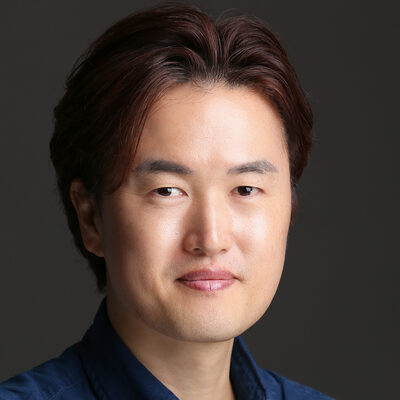
  1. 10:00–10:15Photo of 김동현

    OWASP Korea Day opening

    김동현OWASP Seoul Leader

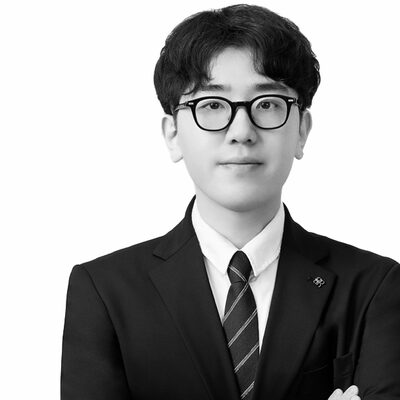
  2. 10:25–11:00Photo of 변준우

    Enterprise AI Agent Security 101

    변준우Security Engineer

    About the talk

    AI agents such as Claude Code and Codex can run shell commands, read and write files and connect over MCP, which opens an attack surface that existing controls never see. This session walks through, layer by layer, how a company can keep AI agents under control: endpoint permission settings, MCP and tool gateways, LLM gateways, observability built on OpenTelemetry, and responses that wait for a human’s approval. It also shares the limits and trade-offs met when putting this into practice.

  3. 11:25–12:00Photo of Eunsu Shin

    Authentication and permission management for building and using agentic AI safely

    Eunsu ShinAWSPrincipal Security Specialist Solutions Architect

    About the talk

    Many companies are bringing in all kinds of agents to automate work and to improve their customer-facing services. This session covers what you need to know, from a security point of view, about authentication schemes, authentication flows and permission management in order to build and configure your organisation’s agents more safely, along with best practices for each of these areas.

  4. 12:00–12:35Photo of Min Sung Jung

    Is building AI guardrails really that simple? Developing a domain-specific (legal) AI guardrail

    Min Sung JungMicrosoftSenior Cybersecurity Architect

    About the talk

    Rule-based guardrails, or golden sets built in English, are not enough to defend against attacks that evade AI security guardrails, such as multi-turn bypasses and splitting Korean syllables into their letters (jamo). This talk shares the know-how for building AI security guardrails that work on context and meaning (for Korean, and specialised for Korean law), rather than stopping at detecting malicious patterns and sensitive output. It also presents a guardrail built for Korean law and regulation and applied to a legal agent, and explains an approach to AI security that checks not only inputs and outputs but the agent’s tool calls as well.

  5. 13:45–14:20Photo of Jinho Ju

    Earning Zero-Days with LLM: Months of Bug Hunting on Real Targets

    Jinho JuRaonSecurePM

    About the talk

    LLMs are changing how vulnerabilities are found. Spotting suspicious places in a codebase keeps getting faster, but proving that a vulnerability can actually be exploited is still a person’s job, because someone has to confirm whether external input can reach the vulnerable code, under what conditions the attack works, and whether there is any real security impact.

    This talk shares the experience, and the questions, from analysing vulnerabilities in public bug bounties and open-source projects since the start of this year. It describes how the approach changed over round after round of analysis: separating the search for potential vulnerabilities from their verification, and using independent verification agents to examine a vulnerability hypothesis from different angles and try to refute it.

    None of this was settled from the start. It grew step by step through trial and error and through the limits of verification met in real analysis. Drawing on that hands-on experience, the talk looks at where LLMs help in vulnerability analysis and where human judgement is still needed.

  6. 14:20–14:55Photo of 이가람

    Is it safe to keep only the vectors? Embedding inversion and protection, checked in practice

    이가람CryptoLab AI Agent TeamResearcher

    About the talk

    “We deleted the original data and kept only the embedding vectors.” So is the sensitive information safe? Embeddings, used in RAG vector databases and in the vector-based long-term memory of AI agents, are built to preserve the meaning and features of the data. But the fact that people can’t read a vector’s numbers directly does not by itself mean the sensitive information in the original is protected.

    This talk covers the embedding inversion risk within OWASP LLM08:2025 Vector and Embedding Weaknesses. Using public inversion tools, it shows what information can be recovered from text vectors, and looks at the conditions to check when interpreting the results, such as which vectors, models and API access the attacker has obtained. It briefly compares image embeddings too, and separates exact recovery of the original text, partial exposure of information, and regeneration of something with a similar meaning.

    Next, drawing on work that evaluated the inversion risk of input words alongside classification performance, it shares how to verify the effect of protection techniques such as noise, quantisation, linear transformation and homomorphic encryption. It considers not only attacks that don’t know the protection method but also attacks adjusted to it, and sets out criteria for weighing protection against search and classification quality and processing cost.

    You will come away with criteria for interpreting inversion results, the scope and limits of each protection technique, and a procedure for re-checking the risk in your own service. The goal is for AI developers and security and privacy staff to talk on the same level and cut down on trial and error.

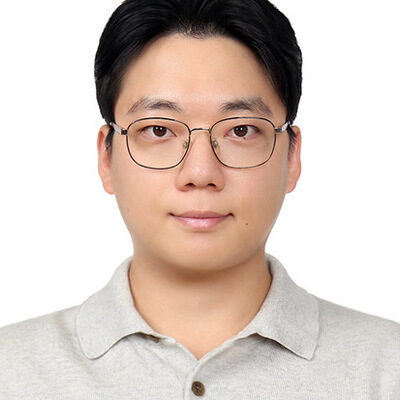
  7. 15:20–15:40Photo of 유정각

    The requests and responses look normal, and it is an attack: the yellow team’s turn to run

    유정각Financial Security InstituteDirector

    About the talk

    AI is changing the speed and scale of attacks. Blue teams and red teams have played their part, but business-logic attacks such as credential stuffing, IDOR enumeration and password-reset abuse are still hard to catch, because each request on its own is normal. Where even a failed login comes back as a message inside a 200 response, detection from outside the application has reached its limit.

    Authentication and authorisation checks are features of the application, yet detecting and responding to their failure is still left to the security team. It is the application that knows the business context. Whether the login success rate is dropping, whether password resets are running above normal, whether the range of objects one user touches is abnormally wide: the application can measure all of these. This talk describes a model in which the application provides security metrics and implements the responses, but hands the switch to the blue team. With hypotheses built and tested on measurable metrics, the response can be stepped up in stages: CAPTCHA, additional authentication, restricted features, and finally a kill switch.

    The same concern started with OWASP AppSensor some twenty years ago, but that work has since stalled. I believe the problem was less the technology than who builds it and who runs it. The talk covers a structure in which the yellow team builds and the blue team runs, playbooks for delegating the response, and how responsibility is divided between the CIO and the CISO. We need to prepare for an age in which AI agents act on users’ behalf.

    Blue teams and red teams will keep on running. Now let the yellow team run with them.

  8. 15:40–16:15Photo of 장웅태

    A bumpy move into finance: the investigator who only ever said ‘no’ lands in the financial sector

    장웅태KB Securities, Information Security DepartmentManager

    About the talk

    A first-hand account of moving from data-breach investigator at KISA to settling in as a security practitioner in finance, with a realistic career roadmap. Through candid interview stories from finance, telecoms and manufacturing companies, and the turning point at which the particular grammar of financial security began to make sense, it passes on practical know-how for finding a job or changing one. It breaks the stereotype that finance is closed off and has no work-life balance, and shares the real organisational culture and day-to-day work as felt after joining. Treating a job not as the finish line but as continuing growth, down to a beginner’s attempts at bug bounties, it offers practical insight to ease the worries of junior security people.

  9. 16:40–17:15Photo of 김동현

    Who should be a CISO?

    김동현Formerly Woowa BrothersCISO/CPO

    About the talk

    This talk defines the CISO from a perspective other than the one in the law, and discusses why a yes-man should not be a CISO and what role a CISO should play.

Community sessions

Galaxy HallRun by the participating communities

  1. 10:30–10:45KUCIS

    About KUCIS, and what it did in 2026

  2. 10:45–11:05KUCIS

    Building a gateway ECU and an IDS: a car-security newbie’s bumpy struggle

    김정현Open-call talk 1

  3. 11:05–11:25KUCIS

    Designing an AI firewall architecture for availability

    서영석Award talk 1

  4. 11:30–12:15Team N1TRO

    Why soft skills matter

    김예준

  5. 12:15–12:30Team N1TRO

    Meet Team N1TRO, and join us

    유성모

  6. 13:45–15:10hackyboiz

    Exploit mock exam

    About the session

    In the age of LLMs, you haven’t forgotten how to write an exploit, have you? Check your skills with a mock exam in exploitation across Web, Linux, Windows, browsers, Android and more.

  7. 15:20–16:45BEAVER DAM

    The Beaver Effect

    About the session

    Meet BEAVER DAM, a community that has grown by bringing together people interested in cloud security through all kinds of activities. From hackathon and CTF wins to running event booths, security projects and a run at DEF CON, they share how they have taken what they learned into practice.

    Come and see what the beavers have been up to together, and where they are headed next.

  8. 16:45–17:05KUCIS

    Deleted photos, faces left behind: on-device AI residue in Samsung Gallery as digital evidence

    박채민Award talk 2

  9. 17:05–17:25KUCIS

    Designing hybrid-cloud IAM authentication on Okta and TSIDP

    윤상원Award talk 3

  10. 17:25–17:45KUCIS

    Highlights from the booth Q&A board

Hands-on labs (sign-up)

Delfino HallBring a laptop; two hours each

10:30–12:30

Real-world web hacking, learned through CTF

김영우 · 장동근 · 백송선

A CTF-based lab: you analyse and attack a deliberately vulnerable web application to learn the core principles of web security. After the basics of Burp Suite and other web security tools, you hunt for flags across Broken Access Control, IDOR, XSS, SQL injection, SSRF, and authentication and configuration flaws.

More about the lab

Beginners get step-by-step guides and hints that explain why each vulnerability happens and how the attack works; experienced players can take on filter bypasses, blind SQL injection, business-logic flaws, and challenges that chain several vulnerabilities together. The aim goes beyond solving puzzles: to see, from the attacker’s side, the security mistakes that creep in during real development, and to build a practical feel for finding and fixing web vulnerabilities.

14:00–16:00

You are the next link: your first security open-source contribution, with OWASP Noir

이환

OWASP Noir is an OWASP open-source project that statically analyses source code to find endpoints and the attack surface. This lab doesn’t stop at using the tool: it is a code-contribution session in which you build Noir on your own laptop and change it.

More about the lab

In your own local environment or a ready-made GitHub Codespaces one, you look at how Noir’s analysis is structured, then write a small example app in a language and framework you know and find the endpoints Noir misses. Each blind spot becomes a test case; you fix the analyser until the test passes, and submit the change as a real pull request.

If a development environment is new to you, there are other ways in — writing YAML detection rules, or contributing mascot artwork. You come away understanding how a security tool reads code and how to write a PR that gets through review, and at the end you are in the room when contributions are merged: the project’s next link.

Venue

Venue

We take the whole B1 floor of SpaceShare Samseong Station Center for the day. Five rooms, five different jobs.

Floor plan, B1, SpaceShare Samseong Station CenterThe B1 floor. Coming in through the centre entrance at the lower left puts you straight into the main lounge, where registration is. Through the doors in the lounge’s right wall is Regency Hall, the main stage. The corridor along the top of Regency Hall leads into Galaxy Hall, the community room, and into Conference Room C, which holds the community booths and sponsor tables. Delfino Hall — the hands-on labs — is across the lifts to the lower right. There are toilets at both the west and east ends of the floor.RestroomsRestroomsLifts · stairsMain LoungeRegistrationRegency HallMain stage400 seatsGalaxy HallCommunity sessions250 seatsConference Room CBooths80 seatsDelfino HallHands-on labs150 seatsIn & out
Main stage Event spacesDoors ToiletsSchematic, not to scale.

Main Lounge

Registration & lounge

The registration desk, badge and swag pickup, and somewhere to sit between sessions.

Regency Hall

Main stage

400 seats

The main track, from the opening through to the closing. Eight talks selected through the CFP take this stage.

Galaxy Hall

Community sessions

250 seats

The community sessions. From 10:30 to 17:45, KUCIS, Team N1TRO, hackyboiz and BEAVER DAM each run a programme of their own.

Conference Room C

Community & sponsor booths

80 seats

Community booths and sponsor tables run all day — hiring chats, product demos and swag.

Delfino Hall

Hands-on labs

150 seats

Bring a laptop and follow along. Two two-hour labs: a web-hacking CTF at 10:30, and a first contribution to OWASP Noir at 14:00. Seats are limited, so each takes a sign-up.

Sign up for a lab
SpaceShare Samseong Station Center

Daehwa Building B1F, 20 Yeongdong-daero 96-gil, Gangnam-gu, Seoul

Open in Naver Map
  • Subway About 2 minutes on foot from Samseong Station (Line 2), Exit 8.
  • Parking There is no parking at the building. Please come by public transport.
  • Entrance Use the centre’s own entrance and go down to B1 — the registration desk is in the main lounge.
Partners

Sponsors & communities

The partners making OWASP Korea Day happen, and the Korean security communities linking up with us. Meet them at the booths in Conference Room C on the day.

Sponsors
  • AIM Intelligence

    An enterprise AI security platform — from automated AI red-teaming to ultra-low-latency real-time guardrails — that helps companies run AI services that are safe and trustworthy.

    In their own words

    AIM Intelligence is an AI security company whose mission is ‘Keep AI Under Control’. With Stinger, which identifies AI security vulnerabilities in advance, and Starfort, which runs real-time guardrails, it supports companies through the whole process of securing and controlling their AI. It is extending its security coverage from generative and agentic AI to physical AI as well.

  • Pinta AI

    An AI agent security platform that shows everything AI agents and MCP (Model Context Protocol) do, and blocks risky actions before they run.

  • Provally

    An AI security platform that checks whether the vulnerabilities SAST finds are actually exploitable, so developers can focus on real risk instead of false positives.

    In their own words

    Provally runs AutoProof, which lets AppSec engineers concentrate on fixing real vulnerabilities. AutoProof takes SAST findings, filters out false positives with static and AI analysis, generates PoC code for the real ones and runs it in an isolated environment to confirm them. Once a vulnerability is confirmed, it generates patched code and checks, with the PoC and test code, that the vulnerability is gone. From verifying the finding to verifying the patch, AutoProof plugs into the CI/CD pipeline as one flow — cutting needless false-positive triage and back-and-forth so teams can get on with building.

  • XBOW

    An autonomous offensive security platform that simulates real attacks to find vulnerabilities in applications and validate them itself.

    In their own words

    XBOW is an autonomous offensive security company rewriting the standard for cyber defence in the age of AI. Combining AI reasoning with the way offensive security work is actually done, the XBOW platform performs expert-level security testing at machine speed. With XBOW, security teams move on from reacting after an incident to a proactive defence at the scale the AI era demands. For XBOW’s customers, autonomous offence is the best defence.

Community
  • BEAVER DAM

    A community working together for a healthy cloud security ecosystem.

    At the booth What would you actually face if something went wrong in the cloud? And those AWS icons you see every day: could you find a matching pair among face-down cards before time runs out? If cloud security is new to you, start with a game at BEAVER DAM. Respond to a mock security incident while building skewers, then match pairs of AWS icons and go for a spot on the leaderboard!

  • hackyboiz

    A security community that grows together through vulnerability research and a security newsletter.

    At the booth A drop-in discussion booth on everything from how AI is changing security research to major security incidents and privacy issues. Come and swap thoughts and experiences with the booth crew and other attendees.

  • KUCIS

    The Korea University Clubs Information Security association — university security clubs nationwide running training, seminars and research together.

    At the booth A booth that links university students with people already working in security. Through a web platform, you can anonymously trade the conversations that are usually hard to start — careers, job hunting, the latest trends. Students get advice from practitioners, and practitioners hear what students see and worry about: a warm place to network and grow together.

  • Team N1TRO

    A team of bug-bounty specialists who hunt vulnerabilities together.

    At the booth A track, racing and F1-themed booth to match the bug-bounty team’s name. Two wargames to play: a bug-bounty gacha game and an F1-style racing game.

In collaboration with
About

About

A machine can learn knowledge, but experience only becomes valuable when it is shared. At OWASP Korea Day we want to connect people so we can face the sharper threats of the AI era together. Share what you have learned, and the intuition experience has given you. On 28 November, come to OWASP Seoul Korea Day — meet people, and share what you have lived through.

The OWASP Seoul Chapter has been running since 2011. Since the fifth leadership team formed in May 2025, more than 16 monthly sessions and more than 12 conferences have given people in security somewhere to meet each other. 43 talks are archived so far, and all of them are at owasp.org/www-chapter-seoul.

Contribute

Contribute

Every call has closed. Thank you to everyone who came forward to speak, bring a community, run a lab, volunteer or sponsor. The calls are kept on their own page.